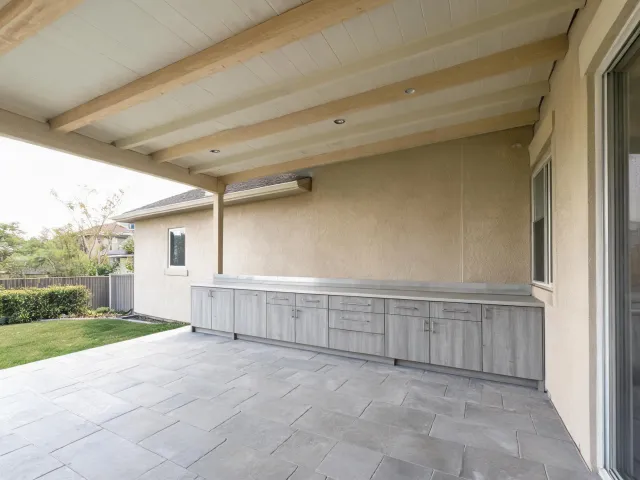
Covered amenity patio
A roof changes exposure but does not remove humidity or wind-driven rain. Identify open sides, drainage and splash zones. Ask where sealants, ventilation openings and countertop interfaces fall within the supplier's scope.
Eligibility applies to qualified business buyers and is confirmed after we review your product, quantity, destination, and sourcing requirements.
Project applications / exposure review
Translate the project setting into supplier questions. Outdoor performance depends on the offered cabinet construction, detailing, installation and maintenance conditions.
Send your application requirementsThese are illustrative purchasing situations, not completed projects. Each setting changes the information a supplier needs before recommending construction or finish.
A roof changes exposure but does not remove humidity or wind-driven rain. Identify open sides, drainage and splash zones. Ask where sealants, ventilation openings and countertop interfaces fall within the supplier's scope.
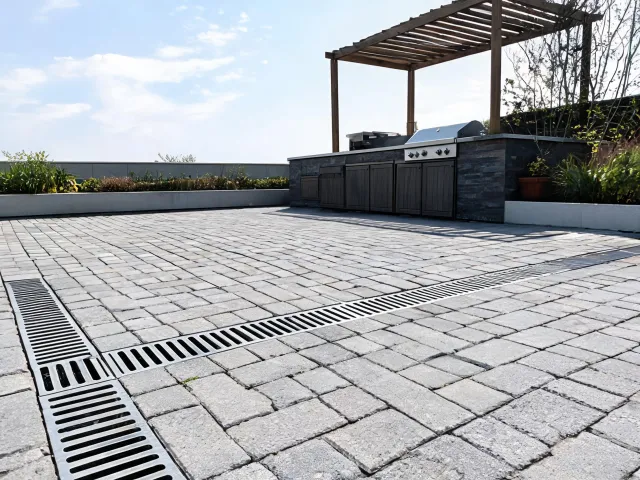
Record cleaning practices and expected operating access. Doors and drawers need usable opening space after installation. Have the project team confirm appliance clearances, service penetrations and whether a cabinet can be removed for repair.
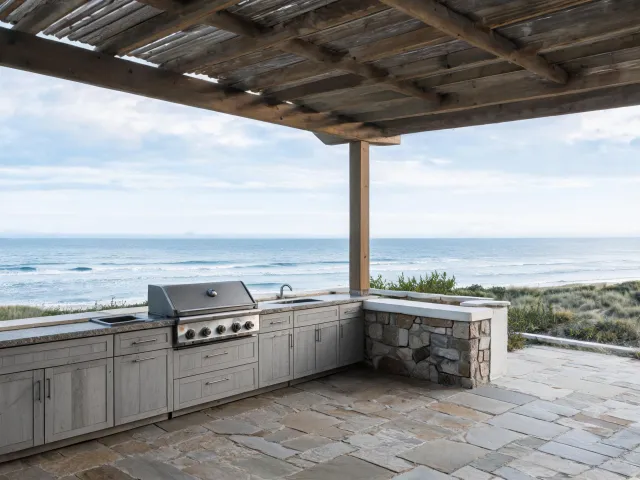
Name the actual location and exposure instead of relying on a coastal-ready label. Request material grades for carcass, doors, fasteners and hinges, plus stated cleaning and maintenance limits. A finish sample alone cannot establish corrosion performance.

Count cabinet pieces as well as complete sets. Use one approved finish reference and a marked layout revision for each release. Packing labels should map back to unit references so site teams can identify missing or changed items.
Application questions

Combine the site exposure with the dimensions, quantity and delivery plan. We can use the brief to seek factory proposals that address the same application.
Request application-matched quotesBusiness procurement support
up to 3%
Eligibility applies to qualified business buyers and is confirmed after we review your product, quantity, destination, and sourcing requirements.
Send sourcing requirements